
Brief community/hacker house FAQ

What are hacker houses?
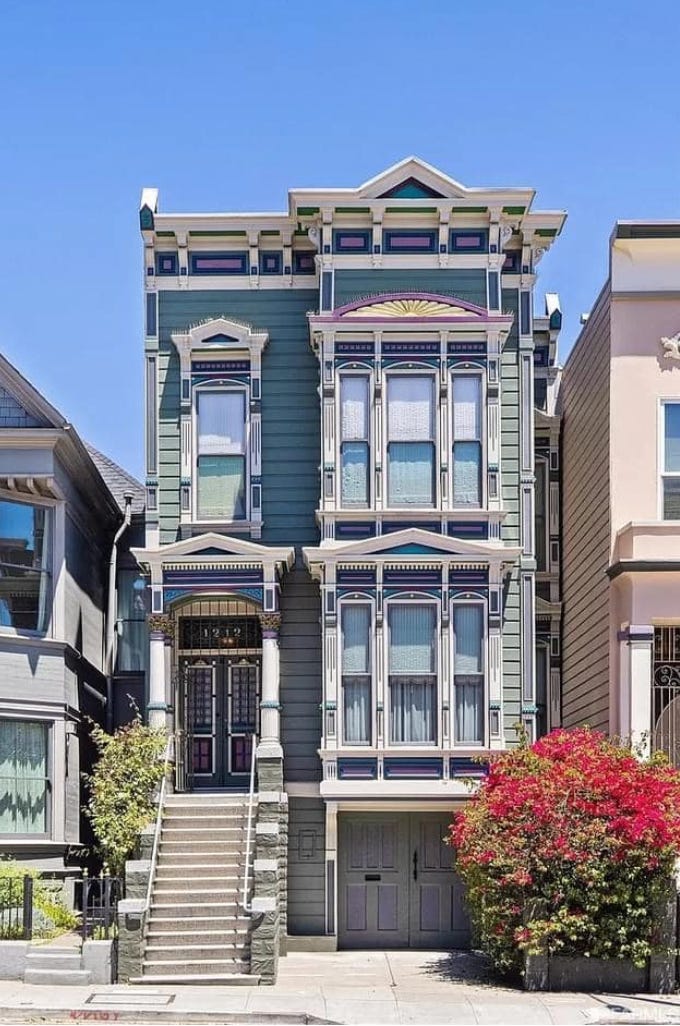
Hacker houses, also called community houses, are groups of researchers, startup founders, venture capitalists, and technologists who live together in San Francisco, often in a large Victorian mansion.
Originally, hacker houses may have started due to the exorbitant prices of rent. However, hacker houses have now become enriching/fashionable even for the wealthy, in the same way where it’s enriching/fashionable to be part of great sorority or fraternity in college. The right hacker house can be a great way to have a sense of community, especially during a lonely founder journey, and to build your network, especially if you’re new to the Valley.
The topic of community houses seems niche. How is it relevant to the larger world?
I’d argue that hacker houses are acting as proto-institutions that are playing a critical role in formation of pre-seed startups, which are eventually relevant to the global economy.
Google and 23andMe originally spun from hacker houses. Living with a group of like-minded people creates a sense of tribe, which is necessary for coordination and the intense, us-against-the-world mentality that startups demand.
What is your experience with hacker/community houses?
When I first moved to the Bay, I stayed at Lighthouse in Palo Alto. I would eventually end up staying at Topos and Genesis. I founded a house called Omega Point. I have social ties to Archive, Nucleus, Embassy, and Crest.
Community houses have been pretty critical in my social experience of the Bay Area and building a professional network in both startups and AI research.
Why go to a hacker house when you can go to Y-Combinator?
It’s not necessarily one or the other. You can do both. They are different experiences. Hacker-houses are long-term residential experiences. YC is a short-term cohort.
Also, some of the more elite houses are becoming more well-connected to venture capitalists than YC.
What are some problems with community houses?
Poorly run community houses can be hotbeds of sexual assault and other disturbing power dynamics.
Living with people can put you in a vulnerable position; plus, due to the highly interconnected nature of the Valley, there are often conflicts of interest that can create large amounts of dysfunction. For example, housemates may be employing each other, investing in each other, and/or dating each other.
There is no license to run a community house and little regulation. Thus there are poor feedback loops, and the environment can be easily hijacked by bad actors. A poorly run community house can be a great lurking ground for predators.
You can learn more from my YouTube video here.
So are you against community houses?
No. A properly run community house can enrich and change your life. Humans like living in tribes. However, there is a disciplined art to running a house well that must be mastered. The founder of a community house must have a strong understanding of ethics, governance, and power dynamics, while having a vision, being socially skilled, and good at operations.
Why are you so fascinated by community houses?
In the same way Mean Girls is a microcosm of the larger world, I have noticed that community houses are often a microcosm of larger power dynamics in AI, startups, and SF culture.